
What you won’t find here? Glitzy feature section style reviews. Miserable boredom.
Heading
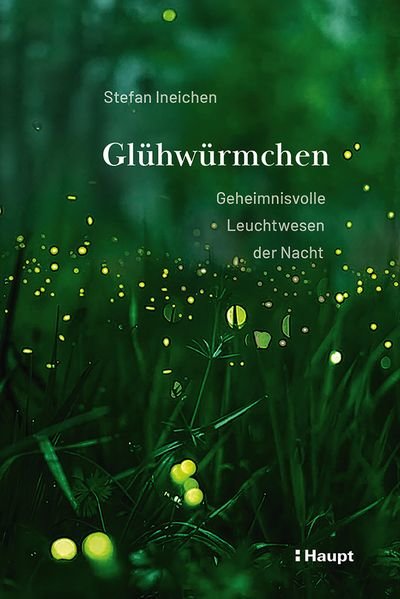
Fireflies are among those insects that one barely notices ... until they suddenly light up out of the darkness on a balmy evening (an event that instantly enchants the heart of the observer). Stefan Ineichen uses this glow as a starting point for an unusual natural and cultural history. His book combines biological facts with historical, literary, and social references.
It is particularly convincing—and it is evident here that the Zurich-based biologist has been studying his "subject" since the 1990s—where natural history observations meet cultural history: the glimmer of the beetles appears as a guide in agriculture, as a romantic nature motif of the Belle Époque, or, as with director and publicist Pier Paolo Pasolini, as a symbol of a threatened world. The Japanese perception of the firefly as a sign of transience also finds its place.
No less interesting are the essayistic passages in which Ineichen shifts his focus from the individual firefly to the environment—and, using topics such as light pollution and habitat loss, makes it clear that the nocturnal glow is by no means something to be taken for granted.
At 160 pages, the volume does not aim for the completeness of a compendium, nor is it a field guide. Instead, it is a clever nature book that consistently combines accessible knowledge with a sense of wonder.

We’ll admit it right away: this isn’t your typical beach read. But that doesn’t matter, because in this case, it’s less about where you read it and more about the fact that you do—at least if you feel any kind of connection to nature. While the title and cover might not be the most compelling sales pitch, the content is impressive from start to finish, both in its writing and its design. Because the author team consists of an urban planner, a philosopher of nature and law, and an architecture journalist, they successfully achieve the interdisciplinary approach that is almost essential these days.
And they do so using very concrete examples. You’ll learn that Mexico City alone is home to two percent of all the world’s plant and animal species. That biodiversity in New York City has increased massively, and that major cities generally offer some of the most underrated ecosystems. That the Seine, Paris’s world-famous river, was recently named an honorary citizen of the French capital. Or that whales and dolphins enjoy a kind of right-of-way in San Francisco Bay. All of this may sound unusual (for now), but this book is a fantastic way to engage with this important new reality.
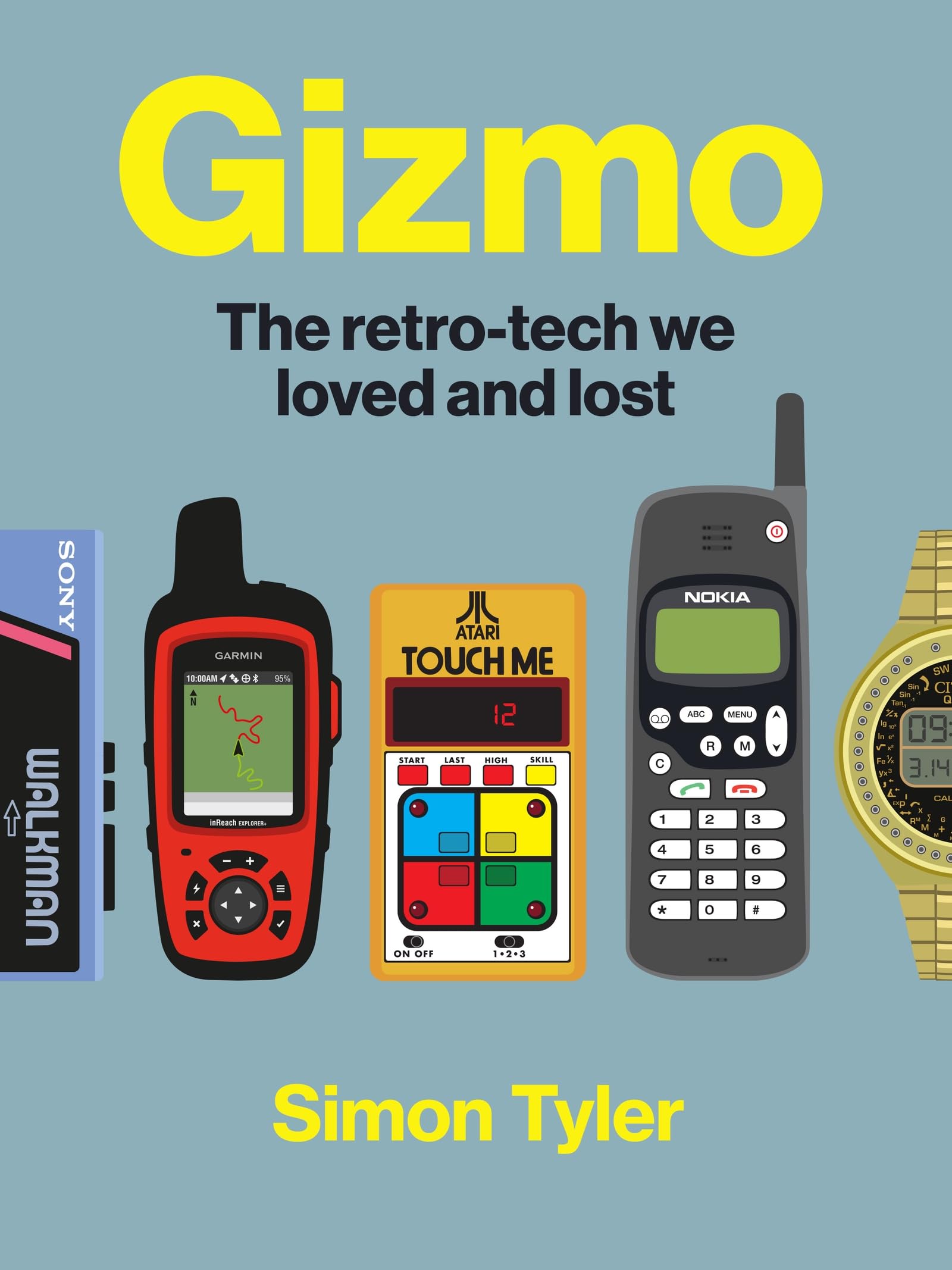
This English-language book is for nostalgics — or for those who enjoy indulging in that particular melancholic state of mind. It explores the kind of things that younger generations here used to lump together under cute, diminutive Swiss-German terms like "Gräätli" or "Teili." Of course, that’s incredibly vague, but the book’s subtitle —, "The retro-tech we loved and lost" — sets the stage: what’s on offer here is a retrospective parade of home computers, synthesizers, drum machines, telephones, game consoles, video games, cameras, calculators, navigation devices, and much more.
Simon Tyler — author, designer, illustrator, and creative director all in one — provides a concise yet historically substantial introduction to each chapter. His descriptions of each device reveal a nerd with a deep love for detail. It’s not just with synths like the legendary Yamaha DX7 (built in 1983) that Tyler provides the pop-cultural context; he also lists the musicians, bands, and songs created with the help of each piece of gear. In short: "Gizmo" might not be the ideal beach read, but it is certainly a fantastic companion for some late-night reading in a hotel bed after a few drinks.

The journey that Millay Hyatt takes us on in her book "Nachtzugtage" spans 13 chapters, each accompanied by a simplified map illustrating the corresponding route. It is a journey that leads us to Edinburgh in Scotland, to Valencia, or Athens, and even Tbilisi, the capital of Georgia, is among the destinations. Each chapter begins with a quote; sometimes it is something philosophical (such as: "You take trips during the day, but you travel at night"), other times it is a statement that sparks curiosity (like "The innkeeper asked where I was headed. I replied: 'Constantinople.' His eyebrows rose").
That alone makes you want to dive into these essayistic stories and experience the adventures of the author, who was born in the USA in 1973 but grew up in Germany, following her credo of "experiencing the world unpadded." Anyone who takes the train from time to time will certainly encounter familiar things. For example, the train window that, with a little imagination, becomes a movie screen. Or those moments of secondhand embarrassment when you find yourself eavesdropping on or even analyzing the behavior of the couple sitting next to you. But there is one element in this book that sets it apart from the usual experience—the night; it becomes a different, fascinating school of perception.
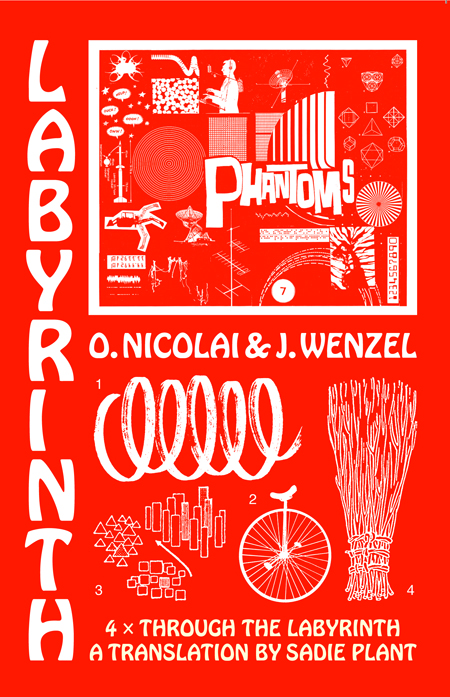
"Why did Theseus kill the Minotaur?" – "Why did he only find his way out of the labyrinth with the help of Ariadne's thread?" – "Does having more knowledge make it easier to find your way? Or does it become more difficult once we understand how easy it is to get lost?" – "How is it that the labyrinth turns us into participants in the blink of an eye? Why can't we break free from this tangle of lines and corridors?" – "Is the path to the center of the intricate maze easier to find than the way back to freedom?"
These are some of the questions raised by authors Olaf Nicolai and Jan Wenzel in their uniquely designed 2012 book, "Vier Mal durchs Labyrinth," which originated from four lectures held in Leipzig in 2010. The French philosopher Jean-Luc Nancy was enthusiastic following its publication: "This book is wonderful! It expands the traditional canon of labyrinths in a comprehensive and successful way because it is structured like a labyrinth itself." The book is no longer available in German, but thanks to a translation by English author Sadie Plant (known for works such as "Zeroes + Ones: Digital Women and the New Technoculture"), the work remains accessible in its English edition.

Es gibt Zeitungskolumnen, die sind in erster Linie amüsant und unterhaltsam, ein genuiner Mehrwert für den Alltag lässt sich darin aber oft nicht ausmachen. Und dann gibt es jene Kolumnen, welche sich engagiert für dieses oder jenes (oftmals gesellschaftliche oder politische) Anliegen einsetzen – und das mit einer zwar durchaus verständlichen, aber doch eher spröden Gebrauchssprache.
Anders Manfred Papsts Kolumne «Zugabe», die seit nunmehr 24 (!) Jahren in der «NZZ am Sonntag» erscheint (und etliche Re-Designs und Umplatzierungen innerhalb des Kulturbundes unbeschadet überstanden hat): Sie (beziehungsweise ihr Autor) bringt das nicht eben kleine Kunststück fertig, relevanten Inhalt – es geht um Sprache in all ihren Facetten, aber immer auch um deren Wandel – mit Verve und Witz zu vermitteln (genau, das verdient ein «Chapeau!»). Für das Buch «Kopf und Kragen» hat Papst von den rund 1200 bisher publizierten «Zugabe»-Texten eine Art «Best of» ausgewählt. Es geht dabei unter anderem um herrliche Helvetismen wie «gäbig» oder «gvätterle», «krüppeln» oder «höckeln», um das Phänomen der Kofferwörter, oder, ein besonders gelungener Beitrag: «Wie unsere Sprache ohne V aussähe».
Das Buch – und das ist uneingeschränkt als Kompliment gemeint – ist eine vorzügliche WC-Lektüre: Es gibt kaum eine schönere Methode, als im schlaftrunkenen Morgenzustand mit einem dieser längenmässig gut dosierten Texte seinen Geist anzuknipsen.
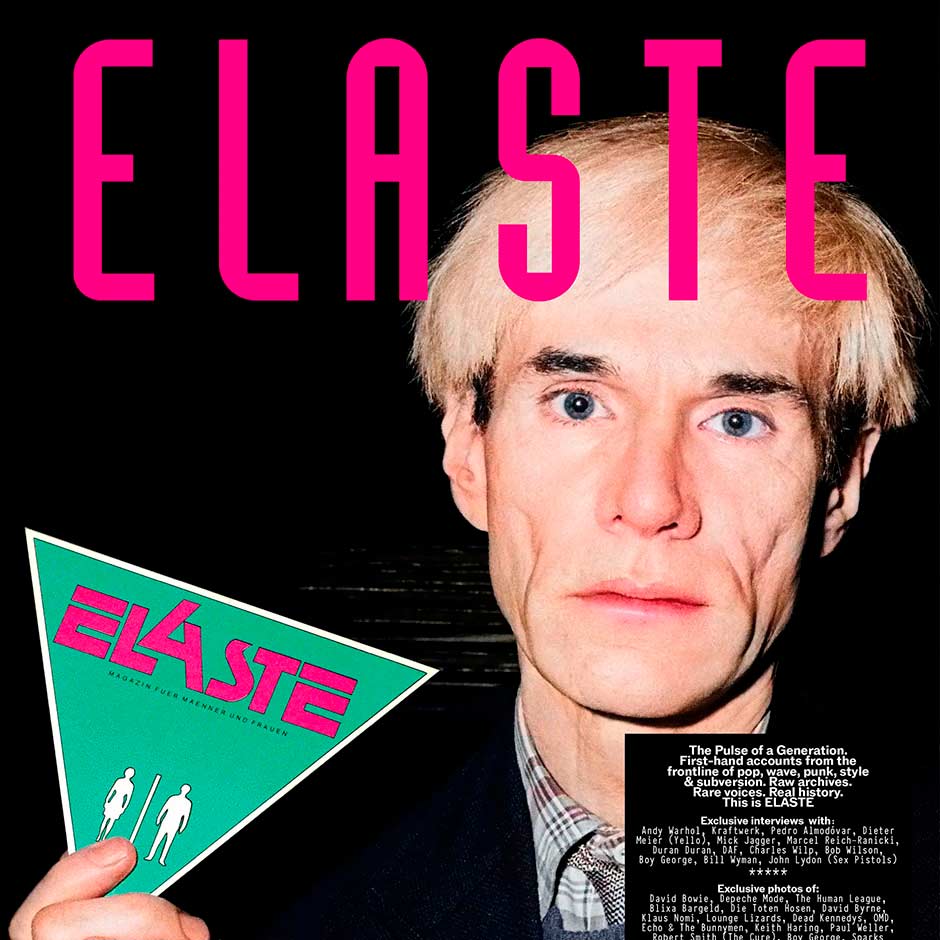
"Elaste," as the German portal "Jazzthing" rightly notes, was "one of the first West German zeitgeist magazines," "born from the spirit of new photocopying technology and punk." The publication was conceived in 1979/80 by Michael Reinboth (later founder of Compost Records, a record label relevant for downbeat, trip hop, and nu jazz), Thomas Elsner, and Christian Wenger.
The fundamental idea of the Hanoverian twentysomethings was to capture and depict the lifestyle trends of that era – New Wave, Post Punk, or 80s pop culture. This was conveyed through a wild, eclectic mix of art, fashion, music, literature, comics, design, and distinctive "people" journalism. Ultimately, 16 issues were published, each shaped by a "DIY" attitude, which is why the formats were not uniform. That "Elaste" nonetheless succeeded was primarily due to its renowned writers, including Giovanni Di Lorenzo (editor-in-chief of "Die Zeit"), Diedrich Diederichsen (a controversial cultural intellectual), and Jon Savage (one of the most important British pop journalists and authors). But it was equally due to influential photographers like Ellen von Unwerth (who discovered Claudia Schiffer) and Sheila Rock (whose iconic work captured the London punk and post-punk scene).
If you're interested in discovering why that zeitgeist still resonates today, you should consider acquiring this comprehensive "Elaste" retrospective.
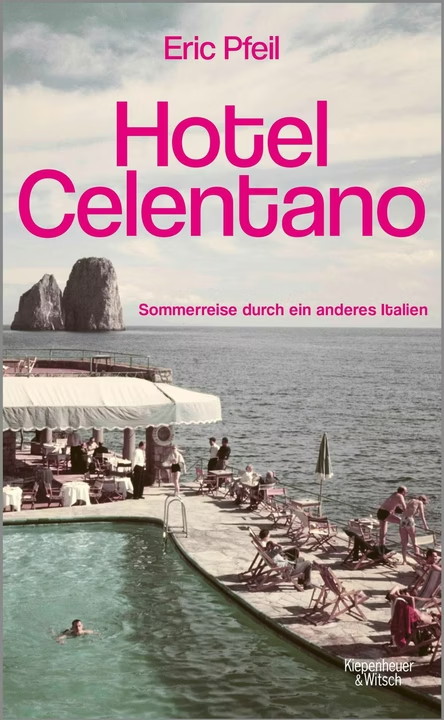
Eric Pfeil has practically earned honorary Italian citizenship by now. For the third time, the German bestselling author pays homage to the pop culture of our southern neighbor. In 2022, he published the book «Azzurro: With 100 Songs Through Italy», two years later, he followed up with «Ciao Amore, ciao: With 100 New and Old Songs Through Italy» . And now, altri due anni dopo, he's releasing «Hotel Celentano» a book that promises nothing less than a "summer journey through a different Italy."
The whimsical work is based on the idea of traveling the country during a summer along those (once) legendary places where unforgettable films were shot and timeless songs originated. For this, Eric Pfeil created an alternative map of Italy for himself – and, of course, for us readers. It is centered around questions that make the hearts of fans of the «bel paese» (both male and female) beat like «cuori matti».
These are questions like: Where did Adriano Celentano actually shoot his films? Where did Fellini star Marcello Mastroianni spend his holidays? In which beach club did the divine Mina give her farewell concert? And, absolutely relevant, because often sobering: What's actually going on in these mystical places today? The adventure, which begins in the foreword at Via Cristoforo Gluck 14 in Milan and eventually travels from Como to Palermo, is a summer read that is as enthusiastic as it is amusing. Nothing more, but certainly nothing less.
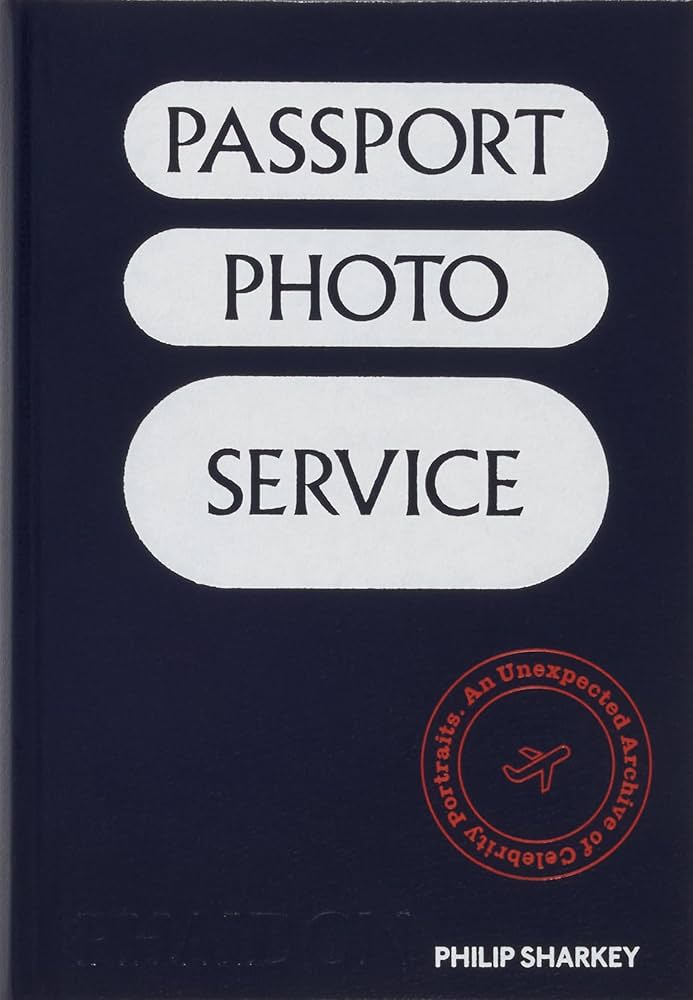
Just a few weeks ago, we noted in this column that a book with a title like 'Switzerland in Cinema' – despite its otherwise excellent content – would hardly sell well. The saving grace then was the (unfortunately often overlooked) subtitle, which proclaimed: '100 International Films Against a Swiss Backdrop'. And now it's happened again! This time, the disappointingly uninspired title is: 'Passport Photo Service'. Once more, help comes from a (barely legible) secondary title, which announces: 'An Unexpected Archive of Celebrity Portraits'.
Turning the book over, you discover that Dave Sharkey opened a passport photo service in 1953 on Oxford Street in London, directly opposite the world-renowned luxury department store Selfridges. For a total of 66 years, thousands of mini-portraits were created for passports, visas, or Green Cards. It's not really surprising that many of the (mostly unadorned) faces captured belonged to famous people, given such a prime location. So it was obvious that Dave Sharkey's son, Philip, who had run the studio until its closure in 2019, would eventually make the celebrity archive accessible to the public.
The conclusion: Most of the 300 photos – spanning from Ali to Jagger, from Connery to Schwarzenegger, from Madonna to Angelina Jolie, from Tilda Swinton to Kate Winslet – are absolutely stunning. And that also applies to the introductory text.
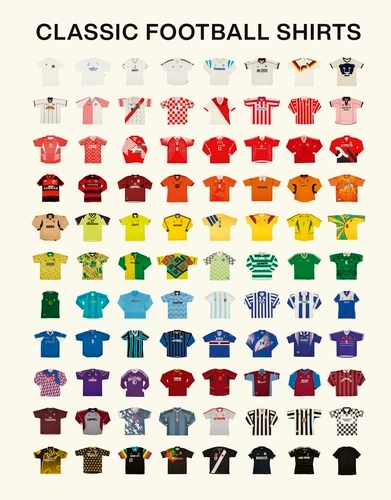
No, the humble football jersey hasn't yet made it to the high fashion runways where androgynous beauties showcase haute couture. But it has undoubtedly become a bit more fashionable and sleek over the decades. Though style is secondary for true fans; they proudly wear even jerseys designed to defy popular taste.
The magnificent book "Classic Football Shirts" proves that such "masterpieces" are produced more often than one might think. It is, so to speak, the archive catalog of the eponymous football shirt provider, founded in Manchester in 2006 by Doug Bierton and Matthew Dale, supplemented by insightful historical and cultural essays. Initially, the students sold these rarities and classics from a bedroom; now, the company, with its motto "No Fakes, no Remakes," is a global leader and operates businesses in Great Britain and the USA.
Much of what is or was available for purchase there can also be found in the book. It features hundreds of original worn jerseys from clubs around the globe, such as Ronaldo's early years, but also the glory days of "Becks" the poster boy at Manchester United. The club shirt collection is complemented by treasures from football's most iconic moments – for instance, the very item Maradona wore when his infamous "Hand of God" was in action, jerseys worn by Pelé and Zidane when they became World Champions... or even jerseys from Messi's record-breaking season at FC Barcelona.

“Switzerland in cinema”? Nope, this is not a book title that is likely to make cinéphiles nervous in any way. However, it gets better when you read the addition: “100 international films against a Swiss backdrop.” Then yes, that is undoubtedly exciting. Because: A handful of films with local locations, that's just what woman/man can do — James Bond alone covers half a dozen with “Goldfinger” (1964), “In Her Majesty's Secret Service” (1969) or “Golden Eye” (1995), plus “The Miracle of Bern”, “Bourne Identity”, “The Magic Mountain”...
But there are still much, much more. And you have to applaud author Arnaud Aubelle: The former book editor for the French film distributor Gaumont, who has lived in Switzerland since 2015, has explored even the nerdiest niches and unearthed many curiosities in the process. In order to provide a good overview despite the immense selection, he limits each film to a few key information (direction, cast, genre, country, Swiss locations, etc.), a hot and tasty review, the connection to Switzerland and the section “Always worth seeing because of...”. He has also divided the films — into common categories such as “Classics” or “Popcorn,” but also into rather unusual genres such as “Double Life,” “Cabinet of Curiosities,” or “In the Supporting Role.” In these sectors in particular, even film buffs are likely to make one or the other discovery.
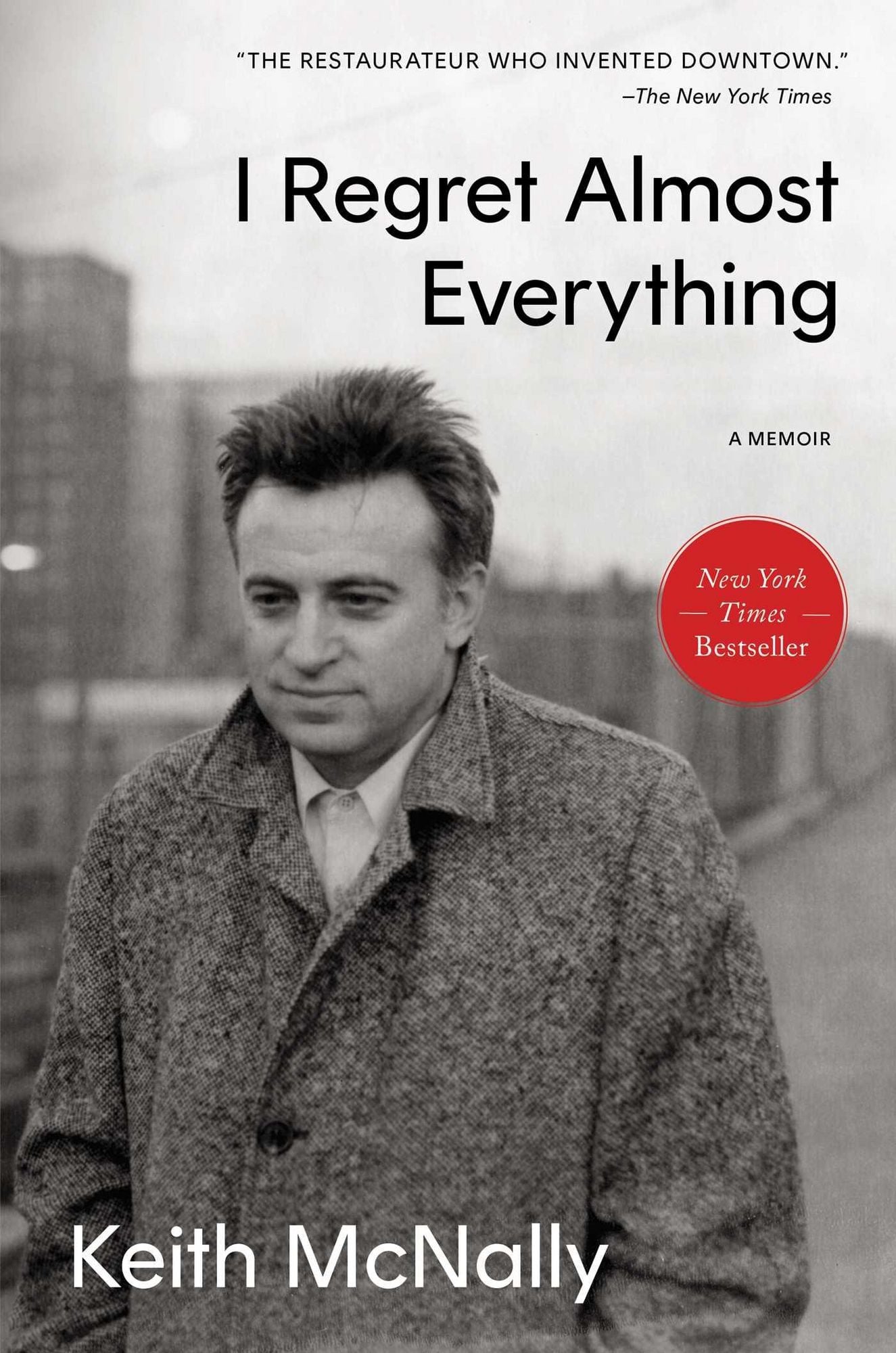
Keith McNally, who the “New York Times” once attested that he invented Manhattan, doesn't talk long about the bush in his memoir “I Regret Almost Everything” (although this mundane dish is hardly ever served in his exquisite brasseries) — in the very first sentence, the unconventional restaurant entrepreneur announces that he tried to kill himself at the beginning of August 2018.
It is the low point of a movingly daring life. Whose paths — this is the most inspiring thing to read — are often influenced by wonderfully “weird” decisions. For example, the fact that McNally, who grew up in London, emigrated to New York in the 1970s because of the film “Klute.” In one shot of the psychological thriller, the main characters Bree Daniels (Jane Fonda) and John Klute (Donald Sutherland) buy fruit after midnight. “When Sutherland reaches for luscious peaches, Fonda's desire erupts on the big screen,” says McNally in the book. After this scene, he wanted to live in New York... not because of eroticism, but because you get fresh fruit there at this time of day. Terrific.
The book is not brand new, it was published last summer (and has not yet been translated into German). But like good red wine, it seems to age well: the reviews and commentaries seem somewhat more hymnical before. Keith McNally is definitely not a “homme de lettre”... but he is also definitely a man with attitude who knows how to make a good story.

A relevant and important book, as it can serve as a comforting, perspective-providing read for people who fear death. Because—and this is what makes it such a fascinating book—the 150 respondents’ approach to the book’s central theme is almost without exception characterized by interest, curiosity, and “down-to-earth” thinking. In fact, only one person mentioned immortality in their wish. Instead, the desire for a world with fewer conflicts emerged. Or the wish to leave something sustainable behind in the realm of art.
It was to be expected that the answers would be individual in nature. But it is precisely this complexity that surprises even Lüscher herself: “One might think that many people wish to die in their sleep. But no—this wish appears only once among the150 respondents. People want to understand and experience what is happening,” summarizes the 89-year-old artist and recipient of the Prix Meret Oppenheim.
Please note: This is a German language edition.
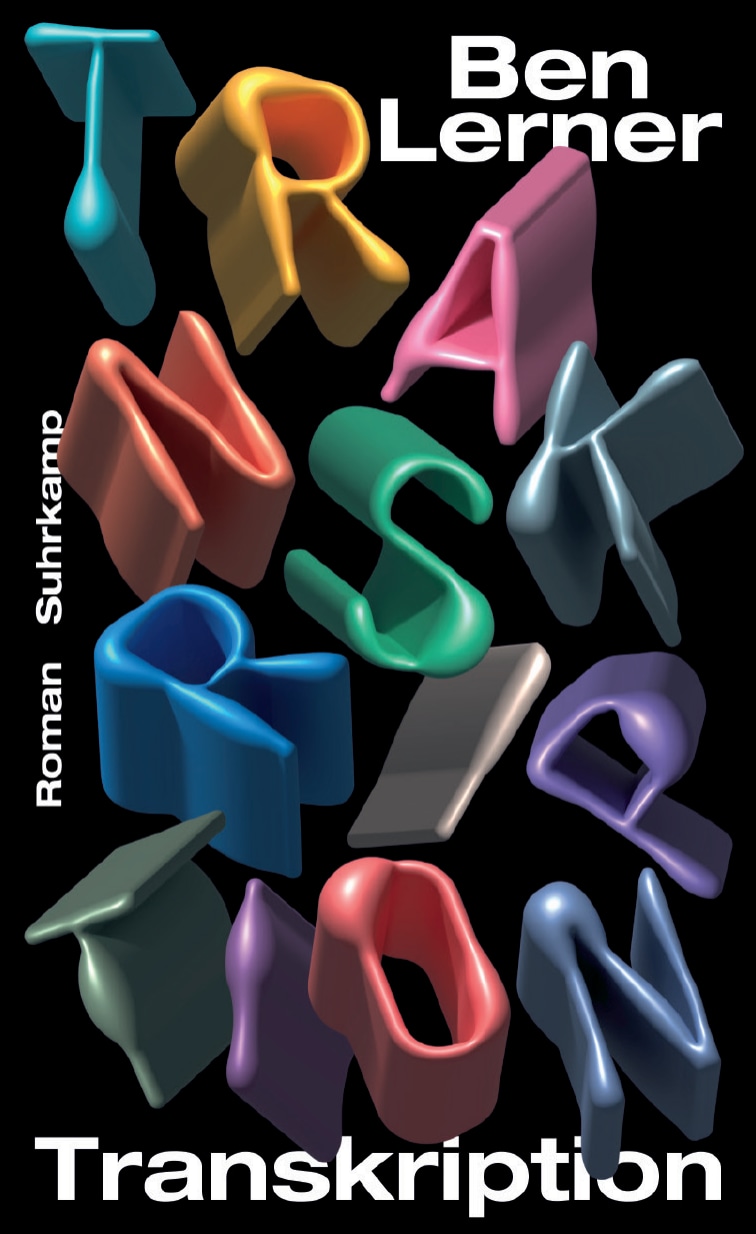
Reading a novel by Ben Lerner is intellectual work. It is casual learning. It is a magnificent twist, time and again. It is the art of dialogue at its finest. It is profound joy. Of course: that’s too absolute and too sweeping a statement; reading is and always will be an individual, subjective adventure. But when countless people from different cultural backgrounds tend toward very similar conclusions, there must be more to it than meets the eye.
Newcomers to Lerner’s work should ideally start with his debut novel, Leaving the Atocha Station, which contains all these elements—often in a powerful form, it should be noted. Or with Transkription, his latest work. In it, the existential question at the heart of the story is what can happen when someone, due to a mishap that is strangely just accepted as such, finds themselves in a situation that would have been more or less routine, but which, because of the incident, develops a completely different dynamic.
Please note: This is a German language edition.
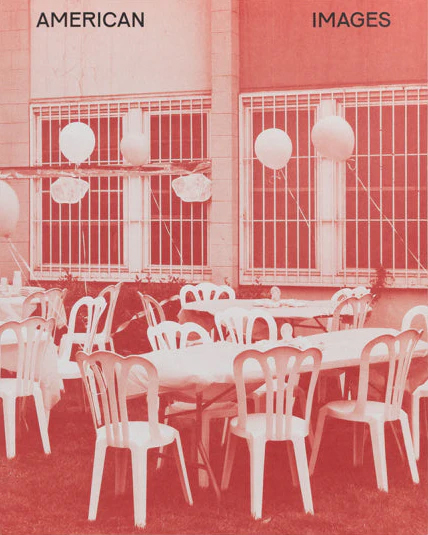
The book American Images—the catalog accompanying photographer Dana Lixenberg’s major traveling exhibition—attempts the impossible: namely, to bring together a 30-year span and diverse projects, such as editorial portraits and the award-winning long-term study "Imperial Courts" (1993–2015) from Watts, Los Angeles.
But instead of failing, the book succeeds in offering a revelation in form of a sort-of retrospective, demonstrating page by page what the Dutch photographer can do like few others: capturing the essence of the human being, independent of the complex context of their biography. Or as Aesthetica Magazine writes in its review of the exhibition, which runs through May 24 at the Maison Européenne de la Photographie (MEP) in Paris: “By returning to the same places over decades and working with the same people, she transforms the camera from an instrument of appropriation into a tool of dialogue and memory.”

Most books published to date that focus on the iconic Parisian bookstores “La Maison des Amis des Livres” and “Shakespeare and Company”—and amorous co-owners, Adrienne Monnier and Sylvia Beach, whose shops were practically across the street from each other on Rue de l’Odéon—deal with the heyday of the interwar years. That is, the time when the avant-garde circle around Ernest Hemingway, T. S. Eliot, André Gide, Ezra Pound, D. H. Lawrence, Gertrude Stein, and Man Ray turned the shops into the famous intellectual circle that Monnier liked to call “Odéonia.”
Uwe Neumahr takes a different approach: In Die Buchhandlung der Exilanten he also addresses these aspects and stories, but broadens the historical focus to include WWII and beyond. This gives us insight into fateful turns in the biographies of the two heroic protagonists... and allows us to experience Hemingway as a U.S. soldier liberating the Rue de l’Odéon!
Please note: This is a German language edition.

Bruno Ganz (1941—2019) was one of Europe's most important actors and a fan favorite. From the working-class district of Zurich-Seebach, he has made it onto the most important stages of German-language theatre and excelled in productions by Luc Bondy, Klaus Michael Grüber, Peter Stein and Peter Zadek. With more than 100 roles in films by directors such as Francis Ford Coppola, Theo Angelopoulos, Wim Wenders, Alain Tanner, Sally Potter, Eric Rohmer and Ridley Scott, Ganz has written cinema history.
To this day, there is no book about the life and work of Bruno Ganz, because he was always reluctant to write a biography. Zurich-based film critic Walter Ruggle conceived this book together with the actor. It explores his life and work by tracing more than 100 film characters he has portrayed.
Schau Spiel Bruno Ganz is an tribute to the outstanding actor and a unique documentation of his art.
Please note: This is a German language edition.

Cats (aka cats, felines, furry noses, kitties, pussies, velvet paws, etc.), owners know this, are idiosyncratic animals. And idiosyncratic animals like to take their own paths. To do so, they naturally need special architectural structures—especially when it comes to finding their way to the food bowl or favorite sleeping spot.
Such structures are called cat stairs. The fact that this mundane term rarely does justice to the actual thing is underscored by the book Catwalk Stories by photographer Francisco Paco Carrascosa, graphic designer Emanuel Tschumi, and art historian Matthias Oberli. The trio traveled across Switzerland, capturing the objects of their desire in documentary style, staging them cleverly—supplementing them with facts, figures, and charming stories.
This original roundup of cat stairs is complemented by a smorgasbord of feline pop culture, ranging from knick-knacks to trash, loosely following the motto: “Cat(ch) as cat(ch) can!”
Please note: This is a German language edition.

Architects, historians, and theorists have had a weird obsession with fascist architecture since postmodernism. Why? And who are the antifascist architects? What does antifascist architecture look like? Antifascist Architecture is the first attempt at creating a working definition of antifascist architecture after academia has spent decades fetishizing fascist architecture.
Brilliant scholarship has of course been presented about anti-colonial architecture, liberation architecture, and so forth. Yet antifascist architecture is an avenue that remains to be explored. This book does just that, offering a kaleidoscopic, peripatetic bricolage of architects who heroically aligned themselves with antifascist struggles, buildings made in the name of antifascism, and a call to arms for antifascist utopian futures. It is written for students and practitioners of architecture, but also activists and scholars in the social sciences who are interested in antifascist history, theory, and practice.
